
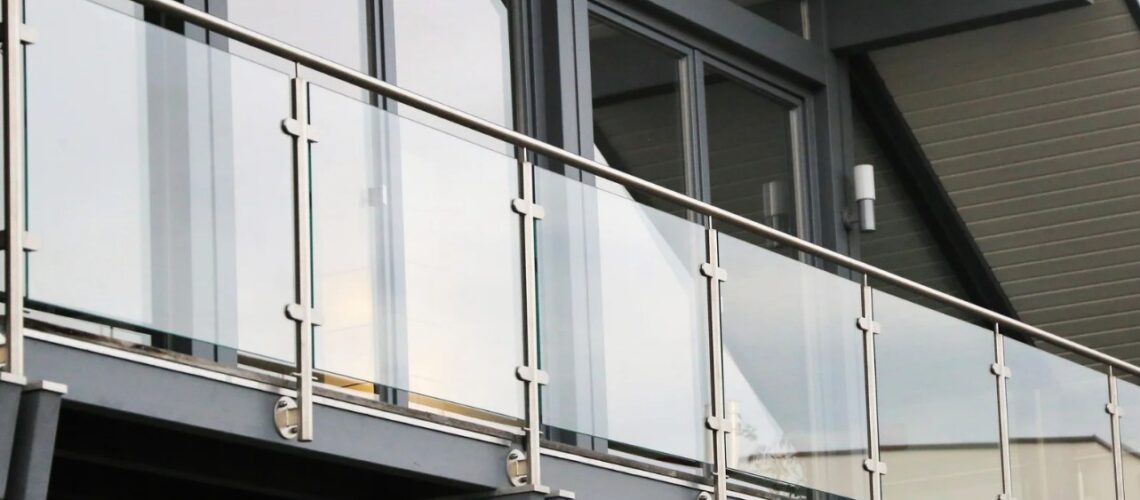

Quick Summary
- Wind Resistance: High-exposure areas in West Calgary require 10mm tempered glass to prevent structural vibration and failure.
- Code Compliance: Alberta Building Code 2023 mandates specific guardrail heights—typically 1070mm for any drop over 1800mm.
- Material Science: Powder-coated aluminum is the industry standard for Calgary due to its resistance to moisture and extreme freeze-thaw cycles.
- View Optimization: Topless glass systems provide maximum clarity but require specialized heavy-duty base mounts to manage lateral pressure.
- Safety Lighting: Integrating LED systems into railings improves visibility during Calgary’s long winter nights and satisfies safety requirements.
- Waterproofing: Vinyl decking provides a 100% waterproof barrier that protects the underlying wood structure from Alberta’s heavy snowmelt.
- Professional Standards: Custom-engineered systems outlast big-box retail kits by providing superior finish durability and thicker structural walls.
If you are a Calgary homeowner, contractor, or homebuilder planning a residential or commercial deck project, your primary goal is likely to achieve an unobstructed view without compromising on safety or local building code compliance. Balancing the aesthetic of modern glass with the structural demands of the Alberta climate requires a specific understanding of material science and local regulations. This guide provides a technical deep dive into selecting the right glass railing systems for high-exposure wind zones, ensuring your project remains safe, durable, and visually clear for decades. Whether you are dealing with the intense Chinooks of West Calgary or the dense infill requirements of the inner city, this article confirms your need for data-driven material selection and professional-grade installation techniques to ensure long-term structural integrity.
Understanding Calgary’s High-Exposure Wind Zones
Calgary is geographically situated in a region characterized by extreme weather patterns. The most significant architectural challenge for railings in this area is the Chinook—a warm, high-velocity wind that can cause temperature shifts of 20°C in hours and wind speeds exceeding 100 km/h. For a glass railing system, these wind loads act as a lateral force that can cause standard systems to rattle, loosen, or fail if not engineered correctly.
In communities such as Springbank, Cochrane, and newer developments like Aspen Woods or Harmony, the “wind tunnel” effect between buildings or across open ridges is a primary concern. When wind hits a solid glass panel, the panel effectively acts as a sail. Without proper glass thickness and secure mounting hardware, this pressure transfers directly to the deck’s rim joists, which can cause the railing to lean or the glass to shatter under stress.
The Physics of Tempered Glass Thickness
For standard residential applications where an aluminum frame supports the glass on all four sides, 5mm or 6mm glass is often used. However, in high-wind zones, 10mm tempered glass is the requirement for topless systems. Tempered glass is processed through extreme heating and rapid cooling, making it up to five times stronger than standard glass. In the event of an impact or extreme pressure, it shatters into small, blunt cubes rather than sharp shards. This satisfies the safety guards section of the National Building Code of Canada.
Comparing Modern Glass Railing Systems
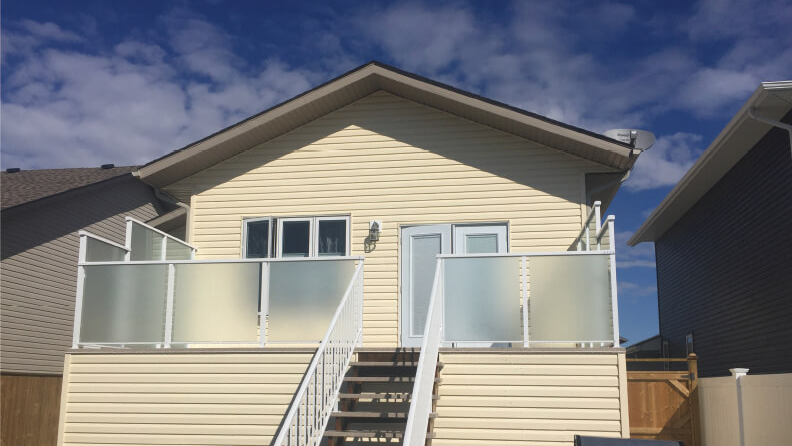
When selecting a system, you must choose between framed and topless designs. Each has specific implications for wind resistance and aesthetic impact.
Framed Glass Systems
Framed systems utilize aluminum posts and top rails to secure the glass panels. These are often the most cost-effective glass railing systems and provide a clear sense of boundary. The aluminum frame adds structural rigidity, which is beneficial on high-elevation decks where a top rail provides a psychological sense of security.
Topless Glass Systems
Topless systems eliminate the top and bottom rails, holding the glass only by vertical posts or base shoes. This maximizes the view, which is essential for properties overlooking the Bow River or the mountains. Because there is no top rail to distribute lateral loads, the glass itself must be thicker (10mm) and the mounting hardware must be heavy-duty.
Table: Railing System Comparison for Calgary Residential Projects
| Feature | Topless Glass System | Framed Glass System | Aluminum Picket Railing |
| Visual Clarity | 100% (Unobstructed) | 85% (Minor obstruction) | 60% (Picket lines) |
| Wind Resistance | High (Requires 10mm glass) | Excellent | Maximum (High airflow) |
| Code Compliance | 1070mm height required | 1070mm height required | 1070mm height required |
| Maintenance | Low (Glass cleaning) | Low | Minimum |
| Ideal Zone | West Calgary / Foothills | Inner-city / Suburbs | High-traffic / High-snow |
| Primary Material | 10mm Tempered Glass | 5mm Tempered Glass | Powder-Coated Aluminum |
The Internal Pivot Framework: A Unique Approach to Stair Safety
One of the most difficult parts of a railing installation is matching the angle of a staircase. Many retail systems only offer 45-degree adapters, which rarely match the actual rise and run of a custom-built Calgary home. This leads to gaps that fail building inspections.
A more effective workflow is the Internal Pivot System (IPS). This framework allows the pickets or glass channels to pivot internally within the top and bottom rails.
How the IPS Workflow Functions:
- Post Positioning: Posts are installed at the top and bottom of the stair run.
- Rail Attachment: The top and bottom rails are attached to the posts.
- Automatic Alignment: As the rails are angled to match the stairs, the internal pivoting mechanism allows the pickets or glass mounts to stay perfectly vertical regardless of the stair slope.
- Locking: Once the desired angle is reached, the system is secured, creating a custom-fit look without the need for complex on-site welding or custom shop fabrication.
This process is particularly beneficial for homebuilders working on infill projects in neighbourhoods like Marda Loop or Altadore, where tight property lines often necessitate non-standard stair configurations.
Looking for a system that fits your custom deck angles? Request a quote to see how the internal pivot system simplifies your installation.
Alberta Building Code and Safety Guardrails
In Calgary, safety is governed by the Alberta Building Code. If your deck surface is more than 600mm (approximately 2 feet) above the ground, a guardrail is mandatory.
- Height Requirements: For decks between 600mm and 1800mm above grade, the railing must be at least 900mm (36 inches) high. If the deck is more than 1800mm (approximately 6 feet) above grade, the railing must be 1070mm (42 inches) high.
- Non-Climbable Rule: To protect children, guardrails must be designed so that they do not facilitate climbing. Glass is an excellent solution here because it provides a smooth, solid surface that cannot be used as a ladder.
- Opening Restrictions: No opening in the guardrail can allow a 100mm (4-inch) sphere to pass through. This applies to the gaps between glass panels and the space between the bottom of the glass and the deck surface.
Authoritative Resources for Homeowners:
For specific permit requirements and the latest bylaw updates, homeowners should consult resources such as the City of Calgary Residential Decks guide. Additionally, for a deeper look at national safety standards, refer to the National Research Council (NRC) National Building Code.
For those managing multi-level builds, stair and ramp railing solutions must follow these same strict gap and height requirements while providing a graspable handrail for accessibility.
Local Calgary Logistics and Service Constraints
Installing railings in Calgary involves specific logistical challenges that contractors and homeowners must anticipate:
- Soil Heaving: Many Calgary neighbourhoods sit on heavy clay soil. This soil is prone to frost heave, which can shift ground-mounted posts for aluminum fencing. To prevent this, fence posts should be set in deep concrete piles or anchored to a reinforced retaining wall.
- Temperature Restrictions: While aluminum can be installed year-round, the heat-welding required for vinyl decking membranes cannot be performed effectively in temperatures below -10°C.
- UV Exposure: Calgary’s high altitude means more intense UV radiation. Lower-quality paint finishes will fade or chalk within three years. Professional systems use a high-durability powder coating designed to resist UV degradation for decades.
Step-by-Step Installation & Compliance Checklist
- [ ] Verify Substructure: Ensure your rim joists are doubled and made of pressure-treated wood. Glass systems are significantly heavier than wood pickets.
- [ ] Site Measurement: Measure the overall length and width of the deck. Account for the thickness of the posts (usually 2″x2″) when calculating rail lengths.
- [ ] Post Layout: Layout the location of all corners, lines, and end posts. Ensure base plates are at least 1 inch from the edge of the deck.
- [ ] Anchor Installation: Use 3/8″ stainless steel lag bolts to secure the posts. Avoid zinc-plated bolts, as they will corrode in Calgary’s winter environment.
- [ ] Rail Cutting: Cut the top and bottom rails to size using a mitre saw with a non-ferrous metal blade.
- [ ] Picket/Glass Insertion: For glass systems, ensure the rubber gaskets are seated correctly to prevent the glass from rattling in the wind.
- [ ] Lighting Integration: If installing railing lights, run the low-voltage wiring through the posts before the top rail is capped.
- [ ] Final Inspection: Check that no gap exceeds 4 inches and that all fasteners are torqued to manufacturer specifications.
Enhancing Safety with Railing Lights
Calgary’s winter days are short, with sunset often occurring before 5:00 PM between November and February. This makes visibility a major safety concern for outdoor stairs. Integrating LED lighting into your railing system provides a functional and aesthetic solution.
Low-voltage LED systems can be built directly into the aluminum posts or the underside of the top rail. This provides downward illumination on the stair treads without creating glare on the glass panels. These systems are energy-efficient and can be set on timers or smart home systems, ensuring your deck remains safe for evening use throughout the year.
Common Mistakes in Glass Railing Projects
- Using Interior Grade Hardware: Many DIY kits use 304-grade stainless steel, which can tea-stain and rust in Calgary’s salty winter environment. Always insist on powder-coated aluminum.
- Improper Flashing: Mounting posts directly through vinyl decking without proper caulking and flashing will lead to water leaking into the deck joists, causing silent rot.
- Ignoring Wind Load: Installing 5mm glass on a topless system in an open-ridge area often leads to glass breakage or excessive noise during windstorms.
- Non-Compliant Gaps: Leaving more than a 4-inch gap between the glass and the house wall or between panels will result in a failed building inspection.
What To Do If Something Goes Wrong
- If the Glass Rattles: This usually indicates a compressed or misaligned gasket. Check the internal rubber strips and ensure the locking mechanism is fully engaged.
- If a Post Leans: This is often a sign of a weak rim joist. You may need to add structural blocking under the deck boards to provide a more rigid mounting surface.
- If the Powder Coating Chips: While high-quality powder coating is resistant to chipping, a heavy impact can cause damage. Use a factory-matched touch-up pen immediately to prevent the underlying aluminum from oxidizing.
- If a Panel Shatters: Clear the area immediately. Contact your supplier for a custom-cut replacement. Do not attempt to use plexiglass as a temporary fix, as it does not meet building code safety requirements.
FAQ
Do I need a permit for glass railings in Calgary? Yes, if your deck is more than 0.6 meters (2 feet) above the ground, a building permit is required. The railing system must meet the Alberta Building Code 2023 standards for height and lateral load resistance.
Is glass railing hard to maintain in Alberta? No, glass is actually easier to maintain than wood. It does not require staining or painting. To keep it clear, simply use a standard squeegee and a mild vinegar-and-water solution once or twice a year to remove dust and road salt.
Can glass railings handle 100 km/h winds? Yes, provided they are engineered correctly. Topless systems must use 10mm tempered glass and heavy-duty posts anchored into a reinforced substructure to withstand the extreme lateral pressure of Calgary Chinooks.
What is the benefit of powder-coated aluminum over steel? Aluminum does not rust, making it much better suited for the wet snow and road salt common in Calgary. The powder-coated finish is baked on, providing a hard surface that is resistant to cracking, peeling, and UV fading.
Can I install glass railings myself? Many systems are designed for easy assembly, making them suitable for DIYers. However, handling 10mm glass panels requires two people and specialized tools. For high-elevation decks, professional installation is recommended to ensure code compliance.
Do you offer privacy options for glass railings? Yes, we offer tinted and obscured glass options. These provide a wind block while increasing privacy from neighbours, which is particularly useful for urban infill homes with close proximity to other buildings.
Is vinyl decking a good surface for glass railings? Vinyl decking is an excellent choice because it provides a waterproof membrane. When installing railings, it is critical to use proper flashing and sealants to maintain the integrity of the waterproof barrier at the post-mounting points.
Conclusion
Selecting a glass railing system in Calgary requires a balance of aesthetic vision and engineering reality. By prioritizing 10mm tempered glass for high-wind zones, ensuring compliance with the Alberta Building Code, and selecting materials like powder-coated aluminum and vinyl decking, you can create a safe, durable, and beautiful outdoor living space. Professional-grade systems offer the durability needed to withstand the local climate while providing the clear, unobstructed views that make a Calgary deck worth the investment. Are you ready to upgrade your view with a custom glass railing system? Request a consultation with our Calgary team to discuss your project requirements. We provide expert advice on wind-load compliance and high-durability materials for homeowners and contractors alike.